01 / LED reflector
Shape the light.
An LED and reflector turn a broad source into a directed beam.
Explore illumination tools Paraxial.Book a demo
Unified multiphysics. GPU-native speed. Agentic engineering.
Ray paths through the mirrors and corrector of a CubeSat telescope.
Fast deterministic physics. AI agents that execute engineering workflows. One GPU-native platform connecting more of the complete optical system. Give your team the capacity to explore more, uncover constraints earlier, and move forward with clearer evidence.
Demonstrated Monte Carlo benchmark1,000,000 trials in 34 s View the benchmark and contextImage quality is only one requirement. Our phone-camera study also tests manufacturing variation, packaging, and temperature.
Separate manufacturing sensitivity from limits already present in the nominal lens.
Examine the cover, packaging, and temperature alongside optical performance.
See where requirements remain unmet and what refocusing alone cannot recover.
Read the camera case study for the models, assumptions, and results behind the film.
Read case studyRay paths, reflected light, and temperature fields from Paraxial reference models. Open a figure to inspect the details.
An LED and reflector turn a broad source into a directed beam.
Explore illumination toolsTrace light through a wide-field eyepiece to the eye pupil.
Explore optical designTemperature gradients across the carrier, bond, and glass provide the basis for deformation and optical analysis.
Explore native FEAExplore each image at full size. Results are specific to the modeled systems and study conditions.
One project can cross several physics domains. Your tools should carry the work forward with it.
Paraxial brings its native physics solvers together behind a common API and shared project context. Work in the interface, automate with Python, or have AI agents run studies. The same numerical solvers calculate the results.
That shared foundation connects optical performance with manufacturing and environmental studies.
See what this means for your teamA different housing material changes more than weight. Our connected studies investigate how mechanics and temperature affect optical performance, revealing consequences beyond a single component.
Read case studySequential ray tracing · Optimization · Tolerancing
Stray light · Ghost paths · Illumination
Temperature · Deformation · Optical performance
Electromagnetic fields · Wave propagation · Photonic devices
Use faster calculations to compare viable options, identify constraints, and choose the next design step.
Evaluate optical designs and manufacturing choices while there is still room to change direction.
Choose with a clearer picture of performance and manufacturability.Investigate the stray-light paths, packaging choices, and environmental effects that can undermine a nominally good design.
Bring more of the product’s risks into the engineering decision.Let agents carry out repeatable work through Paraxial’s numerical tools. Engineers direct the investigation and inspect the evidence.
Spend more of your team’s attention on the next useful question.A clearer engineering process. A shorter path toward a product you can confidently build.
Why Paraxial for your teamAssess image quality alongside manufacturing variation, stray light, and operating conditions.
Build or import an optical system, explore candidates, and optimize against the performance that matters. Inspect the rays, fields, and image quality in one workspace.
Sequential and non-sequential optics in one platform. Native thermal and structural FEA workflows are in early access.
Run large manufacturing-variation studies with GPU-native, full-double-precision computation, while the design is still taking shape.
Explore your tolerance workflowBenchmark from a demonstrated Paraxial workflow. Runtime varies with the optical system, tolerance configuration, analysis metric, and compute environment. This is a specific example, not a universal runtime guarantee.
What you’re building
Image quality, packaging, and manufacturing tolerances.
Imaging performance, alignment, and stray light.
Resolution, aberrations, and illumination.
Beam delivery, focusing, and thermal sensitivity.
Transmit and receive optics, field of view, and collection efficiency.
Imaging, illumination, and light delivery.
Where your optics work
Imaging, diagnostics, and biological measurement.
Near-eye displays and spatial sensing.
Inspection, measurement, and process control.
Optics for demanding size, weight, and operating conditions.
Compact cameras, displays, and sensors.
Build on the optical work you do today. We’re adding the physics needed to evaluate the lens, its structure, and its operating environment in the same workflow.
Sequential optical design, analysis, optimization, and tolerancing. Investigate image quality, sensitivity, compensators, and manufacturing variation with GPU-accelerated physics and agent-driven workflows.
Bring stray light, ghosts, and illumination together with native thermal and structural FEA. Investigate the lens, its housing, and its environment as a connected engineering problem.
Our roadmap brings expanded electromagnetic and wave-optical simulation into the platform, including finite-difference time-domain (FDTD). Connect field propagation, materials, and photonic devices to the rest of the optical system.
The goal is complete system design: connected models and calculations that let engineers and agents evaluate interactions across physics domains.
Optical engineering, optical-software leadership, and large-scale computing. A team built to connect all three.
Meet Paraxial
Led OpticStudio product development at Zemax.
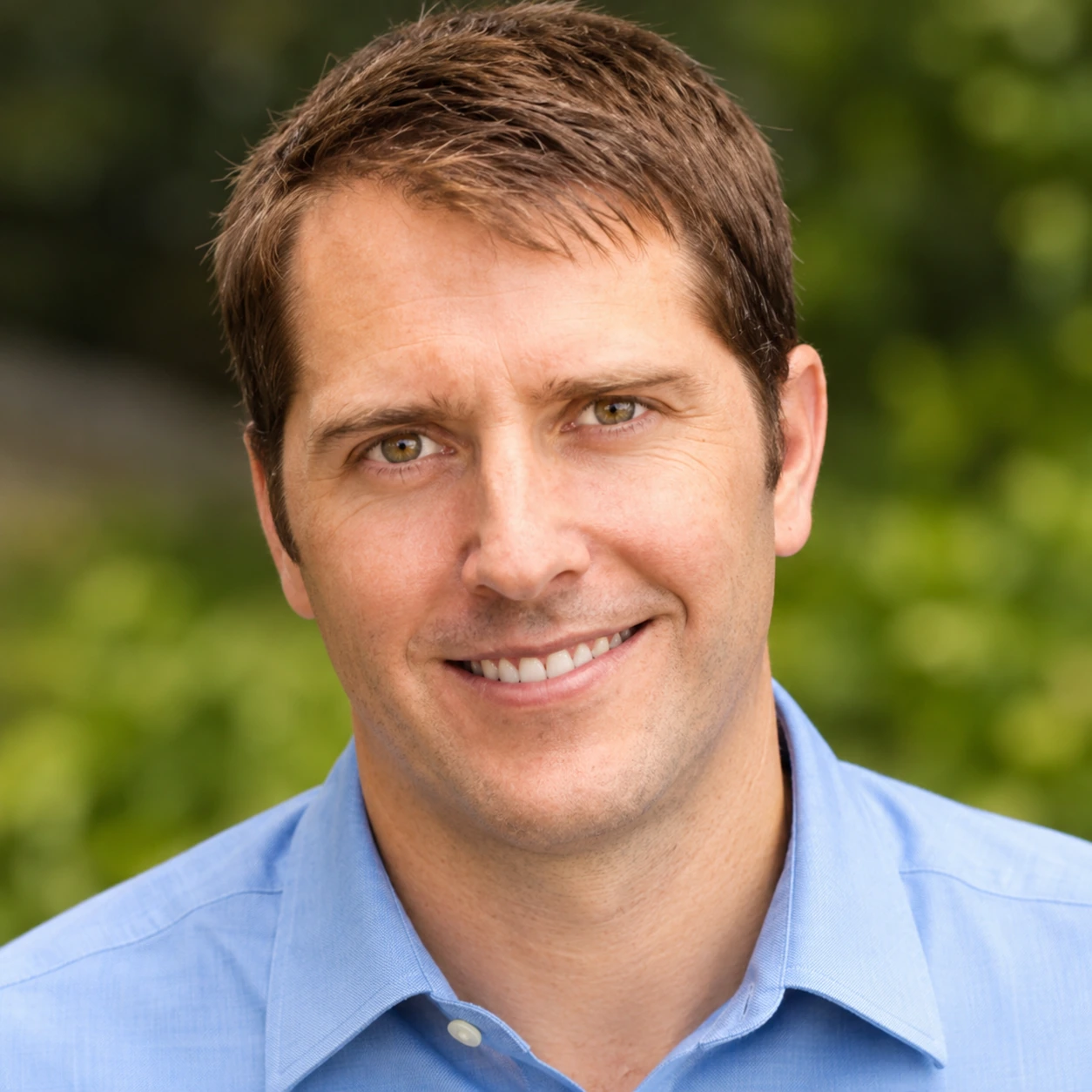
25 years across optical manufacturing, software, and Apple camera tools.

35+ years in software, cloud architecture, and high-performance computing.
Tell us what you’re designing and where the current workflow slows you down.
Discuss your design